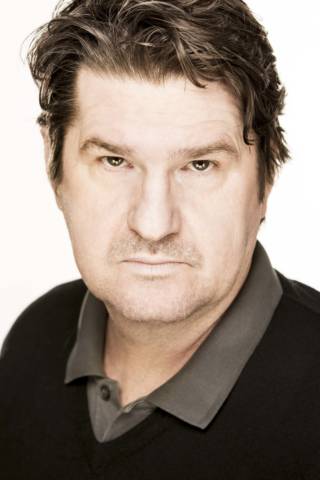
In the Republic of Happiness
Simon Godwin, Royal Court Artistic Associate, talks to the Director of In the Republic of Happiness and also Royal Court Artistic Director Dominic Cooke and cast membe...… Read more
The Royal Court Theatre Presents
By Martin Crimp
6 December - 19 January 2013
Jerwood Theatre Downstairs
Tickets: £28, £20, £12. Mondays all tickets £10
“- What’re you doing here Robert? – Well to be frank with you, I’ve really no idea. I thought I would just suddenly appear, so I did. I suddenly appeared.”
Next Production: No Quarter
A family Christmas is interrupted by the unexpected arrival of Uncle Bob.
Who is he? Why has he come? Why does his wife stay out in the car? And what is the meaning of his long and outrageous message?
All we can be sure of is that the world will never be the same again.
A violent satire, In the Republic of Happiness is a provocative roll-call of contemporary obsessions.
Martin Crimp’s last play at the Royal Court was The City, directed by Katie Mitchell. His previous Royal Court credits include Attempts On Her Life, The Country, Face to the Wall, Fewer Emergencies, Advice to Iraqi Women, The Treatment, No One Sees the Video and a translation of The Chairs (with Complicité). Martin Crimp also created the new translation of Rhinoceros for the Royal Court. His credits elsewhere include Play House/Definitely the Bahamas, Cruel and Tender (Young Vic). His recent translations of plays have included Big and Small, starring Cate Blanchett (Sydney Theatre Company /Barbican as part of London 2012 Festival, Théâtre de la Ville, Paris, Vienna Festival and Ruhrfestspiele Recklinghausen), The Misanthrope (Young Vic) and Pains of Youth (National Theatre).
Artistic Director of the Royal Court Dominic Cooke directs. His recent credits at the Court include In Basildon, Chicken Soup with Barley, for which he was nominated for an Evening Standard Award, and the multi award-winning production of Clybourne Park for which he was nominated for an Olivier Award. Clybourne Park, which won writer Bruce Norris a Pulitzer Prize, opened at the Royal Court in September 2010 to critical acclaim before transferring to the West End. Credits elsewhere include The Comedy of Errors at the National Theatre, as well as adapting and directing Arabian Nights and Noughts and Crosses at the RSC. He will also be directing Choir Boy by Tarell Alvin McCraney this season in the Jerwood Theatre Upstairs.
CDs and Playtext available from our bookshop (UK postage only)
Age Guidance 16+
Approx. running time: 1 hour 45 mins, no interval

| Date | Time | Venue | Notes | Prices | Booking Link |
|---|---|---|---|---|---|
Available Performances |
|||||
Dates in December |
|||||
| Thu 6 Dec 2012 | 7:30pm | Concessions Available | Jerwood Theatre Downstairs | £28, £20, £12 | |
| Fri 7 Dec 2012 | 7:30pm | Concessions Available | Jerwood Theatre Downstairs | £28, £20, £12 | |
| Sat 8 Dec 2012 | 7:30pm | Concessions Available | Jerwood Theatre Downstairs | £28, £20, £12 | |
| Mon 10 Dec 2012 | 7:30pm | Jerwood Theatre Downstairs | £10 | ||
| Tue 11 Dec 2012 | 7:30pm | Concessions Available | Jerwood Theatre Downstairs | £28, £20, £12 | |
| Wed 12 Dec 2012 | 7:00pm | Press Night | Jerwood Theatre Downstairs | ||
| Thu 13 Dec 2012 | 7:30pm | Concessions Available | Jerwood Theatre Downstairs | £28, £20, £12 | |
| Fri 14 Dec 2012 | 7:30pm | Concessions Available | Jerwood Theatre Downstairs | £28, £20, £12 | |
| Sat 15 Dec 2012 | 2:30pm | Concessions Available, Saturday Matinees | Jerwood Theatre Downstairs | £28, £20, £12 | |
| Sat 15 Dec 2012 | 7:30pm | Concessions Available | Jerwood Theatre Downstairs | £28, £20, £12 | |
| Mon 17 Dec 2012 | 7:30pm | Jerwood Theatre Downstairs | £10 | ||
| Tue 18 Dec 2012 | 7:30pm | Jerwood Theatre Downstairs | £28, £20, £12 | ||
| Wed 19 Dec 2012 | 7:30pm | Jerwood Theatre Downstairs | £28, £20, £12 | ||
| Thu 20 Dec 2012 | 7:30pm | Jerwood Theatre Downstairs | £28, £20, £12 | ||
| Fri 21 Dec 2012 | 7:30pm | Jerwood Theatre Downstairs | £28, £20, £12 | ||
| Sat 22 Dec 2012 | 7:30pm | Jerwood Theatre Downstairs | £28, £20, £12 | ||
Dates in January |
|||||
| Wed 2 Jan | 7:30pm | Jerwood Theatre Downstairs | £28, £20, £12 | ||
| Thu 3 Jan | 7:30pm | Jerwood Theatre Downstairs | £28, £20, £12 | ||
| Fri 4 Jan | 7:30pm | Jerwood Theatre Downstairs | £28, £20, £12 | ||
| Sat 5 Jan | 2:30pm | Concessions Available, Saturday Matinees | Jerwood Theatre Downstairs | £28, £20, £12 | |
| Sat 5 Jan | 7:30pm | Jerwood Theatre Downstairs | £28, £20, £12 | ||
| Mon 7 Jan | 7:30pm | Jerwood Theatre Downstairs | £10 | ||
| Tue 8 Jan | 7:30pm | Post-Show Talk | Jerwood Theatre Downstairs | £28, £20, £12 | |
| Wed 9 Jan | 7:30pm | Jerwood Theatre Downstairs | £28, £20, £12 | ||
| Thu 10 Jan | 2:30pm | Concessions Available, Mid-Week Matinee | Jerwood Theatre Downstairs | £28, £20, £12 | |
| Thu 10 Jan | 7:30pm | Jerwood Theatre Downstairs | £28, £20, £12 | ||
| Fri 11 Jan | 7:30pm | Jerwood Theatre Downstairs | £28, £20, £12 | ||
| Sat 12 Jan | 2:30pm | Concessions Available, Saturday Matinees | Jerwood Theatre Downstairs | £28, £20, £12 | |
| Sat 12 Jan | 7:30pm | Jerwood Theatre Downstairs | £28, £20, £12 | ||
| Mon 14 Jan | 7:30pm | Jerwood Theatre Downstairs | £10 | ||
| Tue 15 Jan | 7:30pm | Post-Show Talk, Captioned Performance | Jerwood Theatre Downstairs | £28, £20, £12 | |
| Wed 16 Jan | 7:30pm | Jerwood Theatre Downstairs | £28, £20, £12 | ||
| Thu 17 Jan | 2:30pm | Concessions Available, Mid-Week Matinee | Jerwood Theatre Downstairs | £28, £20, £12 | |
| Thu 17 Jan | 7:30pm | Jerwood Theatre Downstairs | £28, £20, £12 | ||
| Fri 18 Jan | 7:30pm | Jerwood Theatre Downstairs | £28, £20, £12 | ||
| Sat 19 Jan | 2:30pm | Concessions Available, Audio Described Performance, Saturday Matinees | Jerwood Theatre Downstairs | £28, £20, £12 | |
| Sat 19 Jan | 7:30pm | Jerwood Theatre Downstairs | £28, £20, £12 | ||
Sold out Performances |
|||||
Tickets £28, £20, £12
Mondays all seats £10 (available in advance to Friends and Supporters and on the day of the performance from 9am online)
Concessions £5 off top two prices* (available in advance for all performances until Saturday 15 December inclusive and all matinees. For all other performances, available on a standby basis on the day)
25s and under £8* (available on £20 and £12 tickets)
School and HE Groups of 8+ 50% off top two prices (available Tuesday-Friday)
Groups of 6+ £5 off top price (available Tuesday-Friday)
Access £12 (plus a companion at the same rate)
*ID required. All discounts are subject to availability
Writer
Director
Set Designer
Lighting Design
Costume Designer
Composer
Sound Designer
Musical Director
4 stars The Independent on Sunday by Kate Bassett, 16 December 2012
In the avant-gardist Martin Crimp’s satirical, absurdist and strangely gripping new play In the Republic of Happiness, a suburban family sit stiffly over Christmas dinner with polite small talk veering off into senile fantasies and vitriolic rants. Like some kind of visitation, Paul Ready’s possibly predatory Uncle Bob materialises out of nowhere in a silver Puffa jacket, bearing tidings of how his partner, Madeleine, would like to wipe them off the face of the earth.
Michelle Terry’s Madeleine then appears, with a silky smile, saying she and Bob’s new life, far away, is going to be thin and clean, like a pane of glass. Next thing you know the cast have turned into some kind of middle-class cult, smiling at us and spouting – as if reiterating rote – about how individualistic they are: how none of their life choices are political; and how they’re on the path through personal trauma, to happy, gym-fit immortality.
Dominic Cooke’s excellent cast, including Emma Fielding and Stuart McQuarrie, are teasing and riveting. A few sequences are prolix and the interspersed rock songs lack bite, but Crimp’s unhinged structures are potently dreamlike, startlingly comical, and disturbing.
4 stars The Times by Libby Purves, 14 December 2012
Martin Crimp’s play opens on Christmas Day at table, with three generations in paper hats and festering umbrage. Debbie is a whiny pregnant teenager whose sister hates her. Granny doubts the viability of the human race and buys porn magazines for grandad, who is toppling over into self-righteous senility: “I never abused your mother, even when it was the fashionable thing.”
Downtrodden mum and resentful father complete the picture, until Uncle Bob walks in to deliver, with incongruous mildness, speeches explaining that his wife Madeleine hate them all to the point of allergy. “You’ve never run your hand like I have along the inside of her thigh, Tom, where hard lumps erupt when she considers your marriage.”
Naturalistic so far, and funny in a furious John Osborne way. But then the walls melt and the players sit in a row, reciting an antiphonal prose poem that parodies modern preoccupations. A screen announces the “Five Essential Freedoms of the Individual”, each more ridiculous than the last. There’s the right to write the script of your own life, to have a trauma, get over it, look good and live forever. At first it’s puzzling but gradually, amid ripples of laughter, hypnotically brilliant. The whimpering pettiness of modern individualism is hurled back in our face with deadpan earnestness: “My terrible fear of dementia, of childbirth, my addiction to morphine, to shopping, my trauma, my horrid abuse, my abusive father, my manipulative and abusive cat…”
Dominic Cooke elegantly orchestrates his wonderful cast – Anna Calder Marshall is an irresistible grandmother – via a litany of false entitlement to a therapeutic song in which they confess terrible crimes which weren’t their fault owing to their “pain” and the chorus croons: “We don’t use words like right and wrong/ Say to yourself I deserve love, I am strong.” Rhyme “child abduction” with “my human right to liposuction” and you get the idea. Devilish, furious, a mocking mirror. Better if Crimp had ended on this stylised group. But there is a coda, which fizzles out with Madeleine bullying Bob to be happier. But never mind. It’s a bracingly sour Crimpmas treat.
5 stars Whatsonstage.com by Michael Coveney, 14 December 2012
Dominic Cooke has brought his five-year tenure at the Royal Court to a resounding conclusion this year with an exceptional run of plays in both auditoria, and Martin Crimp’s In the Republic of Happiness – who’d have thought it? – is the cherry on the cake.
Structurally unlike anything else he has written, it’s funny, sexy, witty and rude, and performed in bright light with some terrific songs. Crimp goes so far as to call it “an entertainment in three parts,” and it rocks along like a dystopian vaudeville conceived in an unlikely alliance of Alan Ayckbourn, Harold Pinter and Caryl Churchill.
A family Christmas party is interrupted by Uncle Bob and his wife Madeleine, who hates them all. Granddad spent 40 years in general practice and ten before that in prison. Even an imperfect erection can be useful, he says, defending his interest in pornography.
One of the daughters is pregnant, the other merely spiteful. Granny looks vacant, the others semi-occupied. They chomp and chatter in their paper hats until Madeleine in her zipped silk dress lurches into another surreal dimension and is told by Mum to keep away from her children.
In the middle section, “The Five Essential Freedoms of the Individual,” the lines are not credited to any specific characters (as in Churchill’s Love and Information earlier this year). Miriam Buether’s brilliant design disintegrates into a television studio-like anonymity and the actors litanise contemporary obsessions with surveillance, invasion, rape, anger and self-determination, all with a sort of corporate smirk and come-on.
They have the freedom to write the script of their own lives, to separate their own legs, to endure infertility and to recount a history of abuse. An audience’s innate resistance to this sort of stuff is worn down and finally blown away in the insouciant charm of the performance.
And the stage heaves, supplanted by a pristine white box with views of a placid river and green landscape. Bob and Madeleine (Paul Ready and the glorious Michelle Terry) are at it again, condemned to their republic of happiness, their smiling faces and their banal happy song.
The actors are imprisoned and liberated at once, their strange between-worlds condition a source of joy, intemperateness and above all a care for our diversion. Add it all up, I’m not sure what you get. But as it goes by, it’s the most tremendous fun for 100 minutes, my favourite play of the year.
And I love the acting of Peter Wight and Anna Calder-Marshall as the grandparents, Emma Fielding and Stuart McQuarrie as Mum and Dad, Seline Hizli and the impish, sexy Ellie Kendrick as the teenage girls. The lighting is by Peter Mumford and the music for the knockout company songs by Roald van Oosten.
4 stars The Independent by Paul Taylor, 13 December 2012
The Royal Court has a proud tradition of offering alternative Yuletide fare and this year they have surpassed themselves with Dominic Cooke’s razor-sharp production of a work that could be described as the ultimate antidote to mindless festive cheer.
Martin Crimp’s play has a deceptively traditional opening. We seem to be in Alan Ayckbourn territory as a middle-class family bicker round the Christmas dinner table. But then it’s as though Season’s Greetings has been hi-jacked by a squad comprised of the absurdist Ionesco, that master of logorrhoeic misanthropy, Thomas Bernhard, and Caryl Churchill at her most radically playful.
The violent shift from naturalism begins with the sudden unexpected appearance of Uncle Bob (Paul Ready) who has come to relay an epic message of hatred from his wife to the assembled guests.
These include Peter Wight’s porn-loving Grandad; his GP wife (Anna Calder-Marshall) who gets a kick out of thinking that two minutes of her one of her taxi-rides costs more than a bin man could earn in an hour; and wrangling granddaughters, one of whom is pregnant, possibly by Uncle Bob.
The suspicion that Bob’s pose of dutiful mouthpiece is a con and the mind-bending thoroughness of the denunciation induce a kind of blackly comic hysteria. The family cannot hear outside voices, it’s claimed, through the loveless vacuum surrounding them and “their ready-made opinions switch on like the security-lights protecting their property and illuminate the same blank space”.
In a manner reminiscent of Crimp’s earlier play Attempts on her Life, these unthinking cliches of the contemporary mentality are hilariously deconstructed in the middle section, subtitled “The Five Essential Freedoms of the Individual” where the excellent cast, now spirited to a sort of television studios, babble modish mantras, such as “I write the script and I can handle it”, “I’ve moved on. I’m looking good”.
The self-serving delusion that you can lead an apolitical life, the individualism that’s just a type of paranoid narcissistic conformity; the culture of victimhood and therapy-speak – these things are skewered in an overlapping aural mosaic of escalating craziness (“My horrid abusive baby plus flashbacks of my abusive priest!”) and in the tartly funny songs (with music by Roald van Oosten) that imagine an almost post-human existence (“It’s a new kind of world/And it doesn’t come cheap/And you’ll only survive/If you don’t go deep”). Ending with a relationship now shadowed by dementia, this deep, provocative play refuses to heed that advice.
4 stars The Times by Libby Purves, 13 December 2012
Martin Crimp’s intriguing new play opens on Christmas Day at a family table, three generations adorned by paper hats and festering umbrage. Debbie is a whiney pregnant teenager whose sister hates her for being given a car. Granny, a retired GP, has doubts about the viability of the human race and pops down to the shops willingly to get porn magazines for Grandad, who is toppling into self-righteous senility. “I never abused your mother, even when it was the fashionable thing.”
Downtrodden Mum and resentful father complete the picture, until Uncle Bob walks in to deliver, with incongruous mildness, speeches explaining that his wife Madeleine hates them all. He goes around the table politely explaining that to her the grandparents “smell like flood-damaged carpet”, the granddaughters shouldn’t have been born, and as for the parents they give her a rash. “You’ve never run your hand like I have along the inside of her thigh, Tom, where hard lumps erupt when she considers your marriage”. He has a lovely way with abuse: I particularly like the description of people who respond to everything with “ready-made opinions switching on like security lights”.
Naturalistic so far, despite odd surreal touches, and funny in a dark furious John Osborne way. But then the walls melt and all the players are sitting in a row, reciting an antiphonal prose poem which parodies modern preoccupations, as a screen announces the “Five Essential Freedoms of the Individual”, each more ridiculous than the last. There’s the right to write the script of your own life, to “separate your legs”, to have a trauma, get over it, look good and live for ever.
At first it’s puzzling but gradually, as ripples of laughter cross the auditorium, hypnotically brilliant: the whimpering pettiness of modern individualism is hurled back in our face with deadpan earnestness. “I have a right to be offered a full range of serious diseases … my terrible fear of dementia, of childbirth, my addiction to morphine, to shopping, my trauma, my horrid abuse, my abusive father, my manipulative and abusive cat . . .”
Dominic Cooke orchestrates his wonderful cast — check out Anna Calder-Marshall as an irresistible dishevelled grandmother — elegantly through this litany of false entitlement.
It includes a rousing therapeutic song, in which they all confess terrible crimes, from abuse to genocide, which weren’t their fault really, owing to their pain, and the chorus croons “We don’t use words like right and wrong/ Say to yourself I deserve love, I am strong.” Not many lyricists rhyme “child abduction” with “my human right to liposuction”, but that should give you the idea.
Devilish, furious, a mocking mirror.
Better if Martin Crimp had ended the play with this stylised group extolling their shiny-happy delusion that their world has cast off everything including death, leaving them aglow with fitness, emotional health and insane smugness. There is a coda, though, which, despite a stunning mechanical scene-change, does fizzle out a bit with Bob disintegrating in a vague waterside room and Madeleine bullying him to deliver happiness sermons. But never mind that. It’s a bracingly sour seasonal treat: Crimpmas, if you like.
Evening Standard, Henry Hitchings, 13 December 2012
In the Republic of Happiness is the sort of strange and sometimes maddening new play that is guaranteed to divide opinion. It certainly isn’t jovial Christmas fare, despite the presence of enjoyable, quirky songs; instead it’s a political piece that recalls the angry adventurousness of the Sixties.
Martin Crimp is an inventive writer, so it is no surprise that what starts out as a domestic drama — a distinctly unhappy Yuletide gathering, disrupted by the arrival of a sour uncle — mutates into a densely patterned vision of a gobby dystopia. It’s as if an Alan Ayckbourn play has been swallowed by a Caryl Churchill play and then swallowed again, this time by a Sarah Kane play. Along the way there’s more than just a nod to Dante: the three phases of the action equate to the inferno of family life, a talky purgatory and a pale, peculiar image of paradise.
Crimp tears into the contemporary obsession with individualism. He’s venomous and occasionally very funny about narcissism, our short memories and the culture of therapy (both the retail and psychiatric varieties). He also skewers metropolitan smugness, the cut-and-paste aesthetics fostered by desktop technology and the modern historical ignorance that feels like a kind of collective dementia. Less overt is his interest in what might be called downward mobility — a preoccupation with being grubbier than our forebears.
None of this makes for an easy two hours. Dominic Cooke’s production features a strong cast, who commit to the material with unflinching conviction: the standouts are Michelle Terry, Paul Ready and Ellie Kendrick… a spiky provocation that is also deviously poetic.
Special Dates |
|
|---|---|
| Concessions Available |
Thu 6 Dec, 7:30pm Fri 7 Dec, 7:30pm Sat 8 Dec, 7:30pm Tue 11 Dec, 7:30pm Thu 13 Dec, 7:30pm Fri 14 Dec, 7:30pm Sat 15 Dec, 2:30pm Sat 15 Dec, 7:30pm Sat 5 Jan, 2:30pm Thu 10 Jan, 2:30pm Sat 12 Jan, 2:30pm Thu 17 Jan, 2:30pm Sat 19 Jan, 2:30pm |
| Press Night |
Wed 12 Dec, 7:00pm |
| Saturday Matinees |
Sat 15 Dec, 2:30pm Sat 5 Jan, 2:30pm Sat 12 Jan, 2:30pm Sat 19 Jan, 2:30pm |
| Post-Show Talk |
Tue 8 Jan, 7:30pm Tue 15 Jan, 7:30pm |
| Mid-Week Matinee |
Thu 10 Jan, 2:30pm Thu 17 Jan, 2:30pm |
| Captioned Performance |
Tue 15 Jan, 7:30pm |
| Audio Described Performance |
Sat 19 Jan, 2:30pm |
See the Dates & Tickets tab for all dates.
Simon Godwin, Royal Court Artistic Associate, talks to the Director of In the Republic of Happiness and also Royal Court Artistic Director Dominic Cooke and cast membe...… Read more
Box Office: 020 7565 5000
Administration: 020 7565 5050
Principal Sponsor: Coutts